Why 16mm Film Conversion to Digital Should Be Handled by Pros
Your old 16mm film reels capture priceless family memories like birthdays, holidays, graduations, weddings, and everyday moments that you can never recreate. Sadly, these reels are very fragile. Over time, the film can dry out and become brittle, colors can fade, and magnetic audio tracks may break down or separate from the film. It might seem easy to try converting them yourself, but 16mm film conversion is much more complicated than it looks. Using the wrong equipment or methods can permanently damage footage you can’t replace.
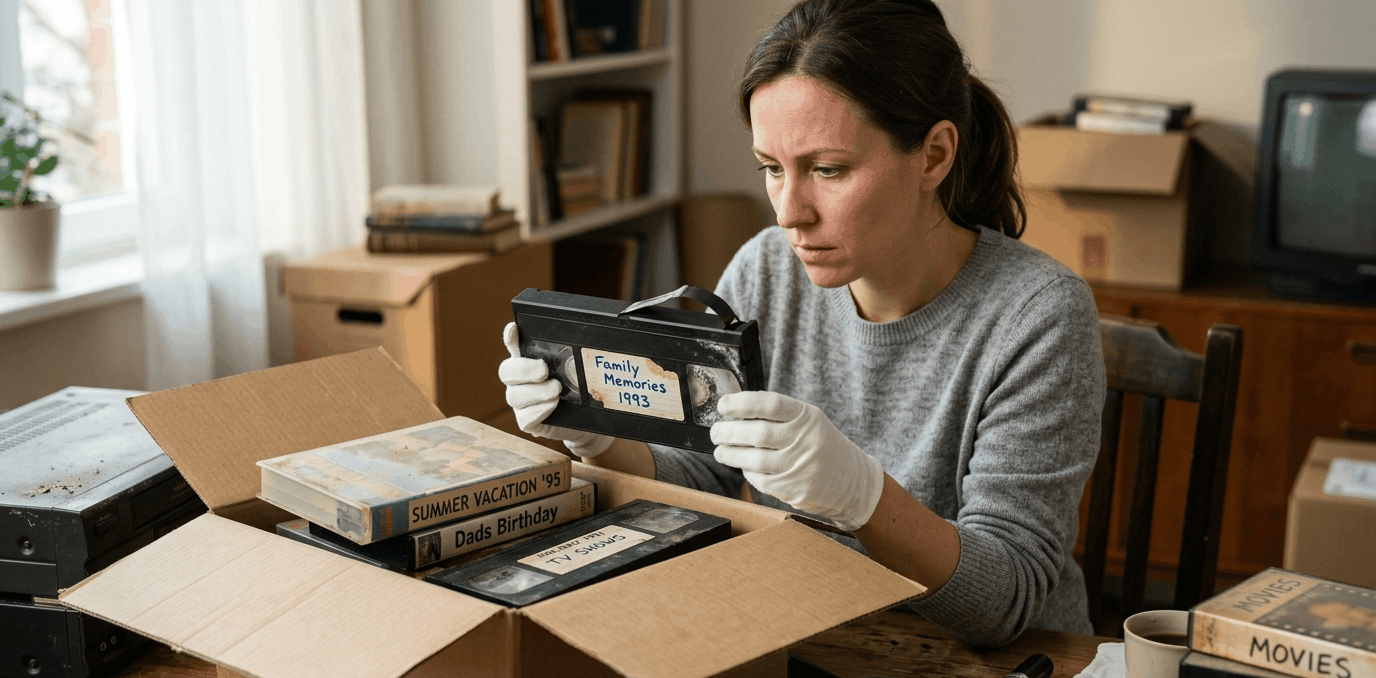
When families look for ways to convert video camera tapes to digital, many think film works the same way. In fact, 16mm film needs a completely different and much more delicate process.
The Challenges of 16mm Film
Unlike digital media, 16mm film depends on precise mechanics and stable chemicals. Standard film projectors were not made to convert footage to digital. If you record a projected image with a camcorder, you often get flickered, uneven exposure, motion blur, the wrong playback speed, and serious color problems.
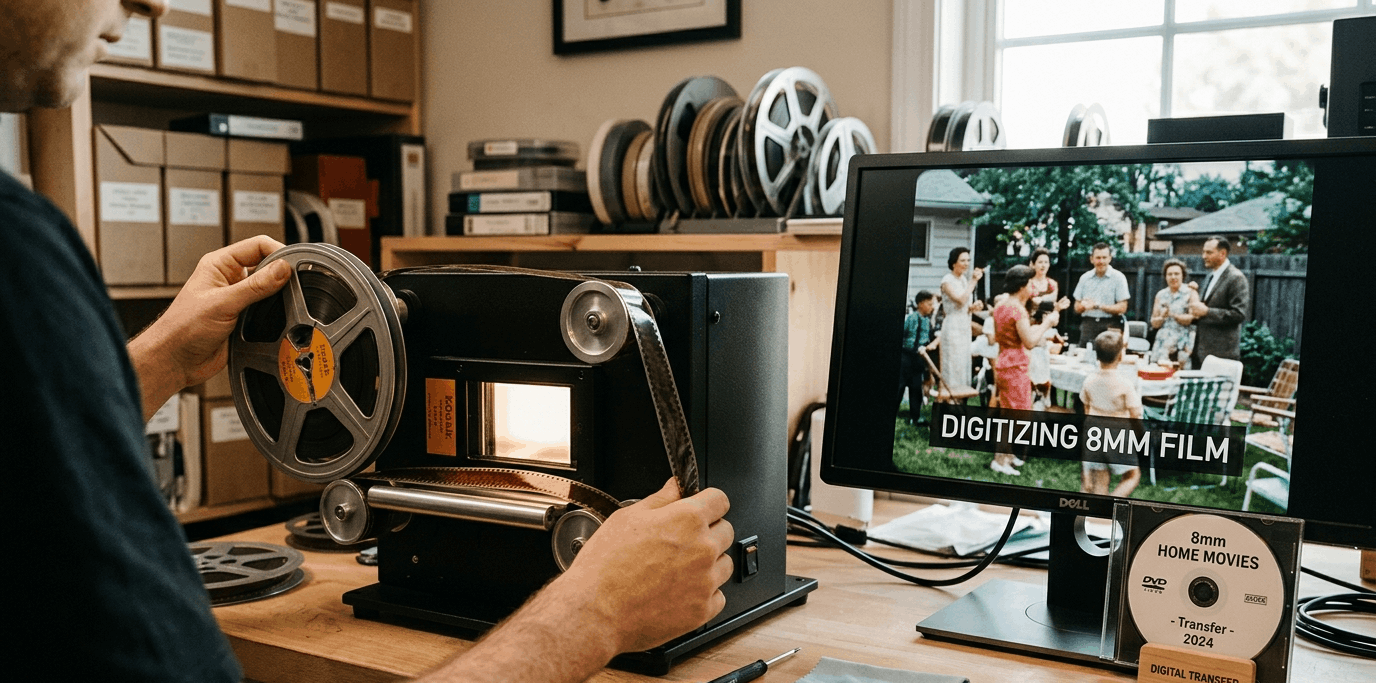
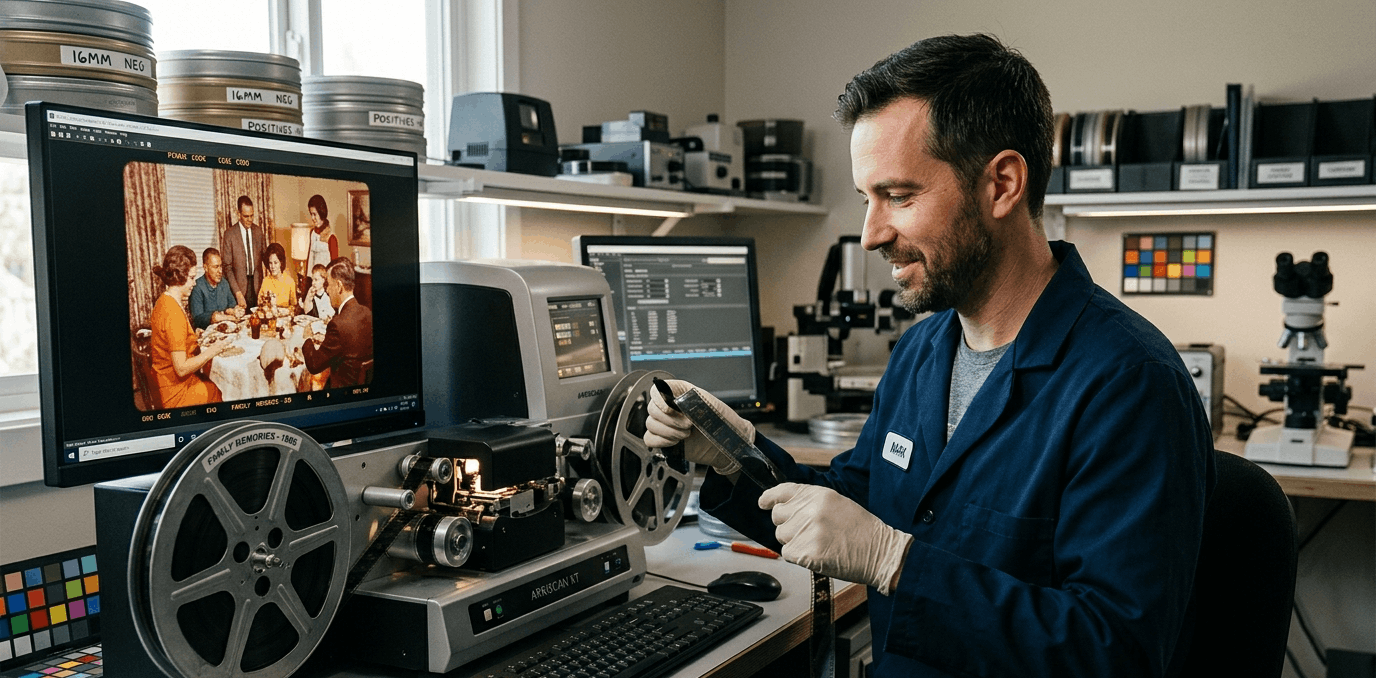
Professionals use telecine machines or modern frame-by-frame film scanners for conversion. These systems capture each frame digitally under controlled lighting and fix frame rates and exposure. This creates a smooth, well-timed digital file without flickering, skipped frames, or changes in brightness.
16mm film has extra challenges compared to 8mm or Super 8 film. The reels are longer, often heavier, and more likely to warp or shrink. Heat, humidity, and light can greatly affect film quality. Without a professional inspection, you might not notice your film is already getting damaged and needs special, gentle handling.
Why Professional Cleaning and Repair Matter
Nearly all old 16mm film needs cleaning before it can be transferred. Dust, mold, residue, and old glue from broken splices can harm both the film and the scanning equipment. Professionals gently clean and fix the film, strengthen weak splices, and correct small warps before starting the digital transfer.
If you run damaged film through a projector or a home scanner, you risk tearing the holes, scratching the film’s surface, or even breaking the film completely. This kind of damage can’t be fixed. Professionals know how to spot warning signs and adjust how they handle the film to prevent these problems.
Equipment You Simply Don’t Have at Home
True professional 16mm conversion requires specialized equipment to convert video camera tapes to digital, including:
-
Frame‑by‑frame telecine or film scanning systems
-
High‑resolution digital sensors for archival‑quality output
-
Precise sprocket‑free transport mechanisms for brittle film
-
Professional color‑correction software
-
Frame‑rate conversion to ensure natural playback
Home equipment is not made for this kind of precision. If you want to keep your memories safe for years to come, the difference in quality between doing it yourself and using a professional service is clear.
Audio, Color, and Image Restoration
Many 16mm films have optical or magnetic soundtracks. Over the years, these tracks have broken down just like the film does. Professionals can safely extract, sync, and digitally restore the audio using modern noise reduction tools.
Professionals can also digitally steady shaky footage, fix faded colors, reduce scratches, and repair small frame damage. These fixes make your film much easier to watch while keeping its original feel.
Conclusion
Converting 16mm film to digital is about protecting your family’s history. Just like you would trust experts to convert video camera tapes to digital, your 16mm film deserves the same professional care.
A trusted company like Any & All Media has the right equipment, experience, and expertise to keep your memories safe and deliver high-quality digital results.
Any & All Media provides professional 16mm film transfer services. Call 608-221-2422 today to save your precious memories for future generations.